Energy Wonders of The World: Dogger Bank, North Sea Winds Matched With HVDC Transmission
- 4 days ago
- 2 min read
Updated: 15 hours ago
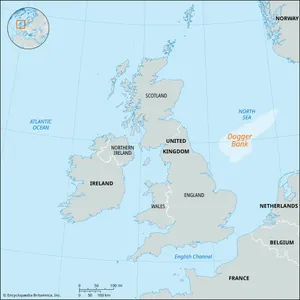
Located nearly 100 miles off the Yorkshire coast of England, Dogger Bank is set to become the largest offshore wind farm in the world. Capitalizing on the winds of the North Sea, considered the best in the world for offshore wind, the project is one of the world's most pivotal energy infrastructure developments.
The 3.6 GW project will meet approximately 5% of the U.K.'s total electricity demand upon completion in 2027, solidifying its place as an Energy Wonder of The World.


Breaking Through Barriers
The 3.6 GW project covers 413,000 acres of sea space. This coverage area is similar to acreage of the Isle of Skye in Scotland or Maui. A large amount of land, yet a smal portion of the vast North Sea.
The project which is built in three 1.2 GW phases, includes 277 colossal GE Vernova Haliade-X turbines. Operating at a capacity range between 13 MW and 14.7 MW, these 260-meter-tall structures stand nearly as tall as the Eiffel Tower's main architectural structure.
The famously relentless North Sea gales enable the giant blades to generate significant electricity, and to maintain a capacity factor of 50 to 60%, outperforming a typical onshore wind farm's 30% capacity factor. The blades typically spin 5,000 to 11,000 times per day, with a single rotation being able to generate enough electricity to power an average home for two full days.
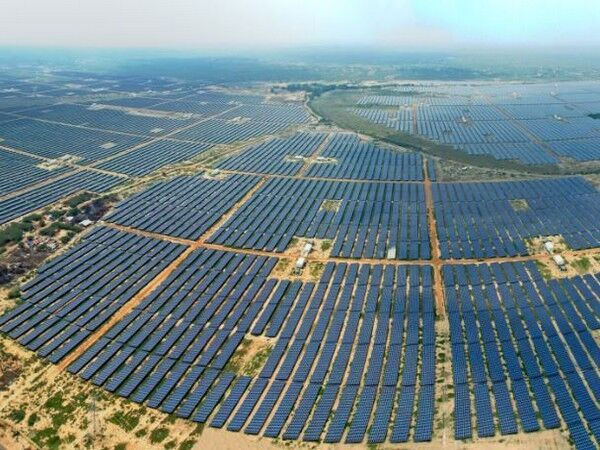
In total, Dogger Bank will produce 18 TWh per year, matching the annual output of one of the largest solar developments in the world, China's Gonghe Talatan Solar Park, which uses approximately 7.5 million solar panels set upon a Tibetian plateau to hit this threshold.
Revolutionary Transmission: An Electricity Super-Highway From Sea To Land
Sitting as far as 125 miles out to sea, Dogger Bank overcomes the challenge of power diminishing across long distances. While traditional Alternating Current (AC) cables suffer severe energy drop-offs over long distances, Dogger Bank introduces an engineering marvel: a specialized subsea HVDC network built directly into the ocean floor. (Even more advanced than the transmission line that was constructed to build an electricity super-highway between Quebec and New York City.)
This breakthrough system converts raw electricity into a highly stable stream, shooting it across 80+ miles of seabed to land with virtually zero transmission loss. While the UK is home to other massive offshore wind farms, Dogger Bank is the first-ever offshore wind asset in the United Kingdom to utilize a subsea HVDC link that connects an offshore array directly to a mainland grid.
The UK currently has nearly 50 operational offshore wind farms providing 20% of the total power mix. One of the highest shares for offshore wind in the world, as the UK capitalizes on its geography and engineering advances.
Dogger Bank | Project Facts |
Nameplate Capacity | 3.6 GW (3 Initial Phases) 5.1 GW (With Proposed Phase 4) |
Completion Date | Phased rollout through 2027 |
Total Project Costs | $11.5+ Billion |
Construction Time | 15 Years |
Offshore Distance | 80 - 125 Miles (130 - 200 km off Yorkshire coast) |
Annual Energy Supplied | 18 TWh (equivalent to 5% of the electricity consumption of UK, annual energy usage of 6.6 Million Households) |
Wattlytics helps portfolios leverage a data-first approach to reduce utility costs and optimize the timing of investments in advancing energy technologies.